The people behind four decades of progress

HomeFeatured PostThe people behind four decades of progress

They’ve been described as many thingspioneers, visionaries, trailblazers and, yes, even rule breakers. These individuals, who have led operations large and small, span the spectrum from engineering/manufacturing wizards to masters of retail and/or commercial. Some have passed on, but by no means are they forgotten; others continue to make an impact in today’s challenging environment. FCNews honors 40 flooring professionals who have made (and continue to make) their mark in the floor covering industry.

Carl Bouckaert

To call Carl Bouckaert an optimist is a gross understatement. No matter the challenges—business or personal—he never gives up and always amazes by giving even the darkest moment a positive twist, an opportunity to turn it into a new life experience.

Since arriving in Dalton at age 23, Carl has been relentless in pursuing the American dream. An entrepreneur, visionary and the first to invest in vertical integration in both fiber extrusion and weaving of primary and secondary carpet backing, he built Beaulieu of America into the largest privately owned flooring manufacturer in North America. Along the way, he demonstrated a sharp analytical ability to grasp the most complicated matters and make quick decisions.

—Piet Dossche , Dossche Holdings
Floyd Sherman

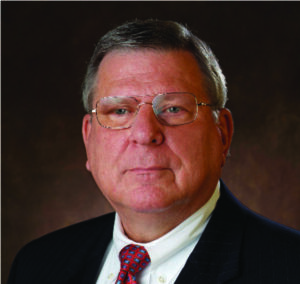
Working for Floyd Sherman for almost 20 years was never dull. He had a passion for the wood flooring industry unlike any that I have experienced before, or since, my time at Bruce Hardwood Floors/Triangle Pacific. Under his leadership, Bruce Hardwood Floors grew at a rate of 25% or more annually for most of my tenure there.

Floyd was very goal-driven and expected those around him to strive for the same objectives. Mediocrity was not an option. His aim was to expand knowledge of hardwood flooring. Whether it was the Bruce school that was started in Nashville to teach retailers and tradesmen installation, or the regional and local installation classes led by the Bruce field sales team, knowledge was the common thread.

—Brenda Cashion, Swift-Train Co.
Keith Campbell

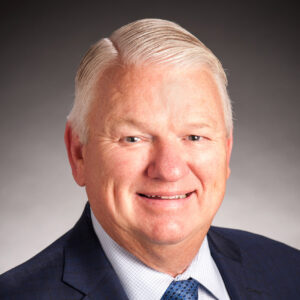
You may know Keith Campbell as a successful businessman or as Mannington’s former chairman of the board. What you might not have known is that Keith came up the hard way within Mannington, from sweeping floors during the summer while still in school, to hoofing it on the street as a sales rep, before transitioning into a variety of executive positions. His father, John Campbell, fully understood that these tasks would help make Keith the man who represents the fourth generation of the family business, who proudly took the company across the 100-year milestone.

To know Keith is to know that he is one of those rare individuals who has found that wonderful balance in life among family, business and spirituality.

—Jeff Striegel, Elias Wilf
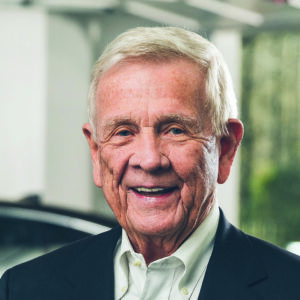
Robert E. “Bob” Shaw

Robert E. “Bob” Shaw’s career spans almost the entire history of the carpet industry, from DuPont’s introduction of a strange new polymer called 501 nylon in the 1950s, to today’s modern industry. He has seen many changes and technological innovations in the industry over his career, but he lists four major technology shifts that have had a multi-decade impact—the tufting machine replacing woven carpet, continuous dye replacing becks, BCF filament replacing staple and solution-dye technology, replacing piece dye.

Bob Shaw was part of the “renegade” group known as the TTMA—Tufted Textile Manufacturer Association, a group of tufted carpet suppliers who formed an association because the traditional woven carpet makers would not let them join their carpet association.

Since the 1960s, he has led nearly every shift in the carpet industry with an uncanny knack of being “lucky” to be in the right position to take advantage of the technology or merger opportunity.

As anyone who has ever worked with him, or for him, knows: “luck” is anything but that. It comes with an unusual but highly successful management style that involves developing a deep understanding of all the factors and issues facing the industry and implementing successful strategies to address these opportunities.

—James Lesslie, Engineered Floors
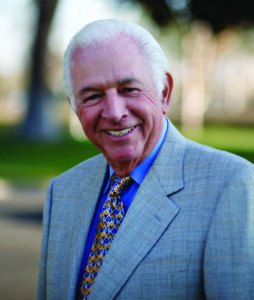
Mike Derderian

I’m pretty sure that most everyone knows the story of how my father got started in the carpet industry—one tufting machine, two employees and $2,500 to his name. And with that, Royalty was born.

Throughout his 45-plus years at Royalty’s helm, he overcame many obstacles and stayed true to his vision—to be the premier carpet manufacturer on the West Coast.

His focus was always on what he called “Triple S”: sophisticated styling, superior performance and service.

What people might not know about my dad is that he was a salesman at heart. It didn’t matter whether it was Dictaphones, shoe inserts, magazines or carpet, my dad knew how to sell—and he could sell lots of it. My dad was an extremely savvy businessman; the fact that Royalty was around for 50 years is a testament to that.

—Andrea Greenleaf, former president, Royalty Carpet Mills

Olga Robertson

Olga Robertson came into the flooring industry as a protégé of her mentor, Bob Hill, many years ago. She quickly learned that she was working in an industry managed by—and driven by—mostly men. It was in that respect that Olga saw her opportunity—and she seized it.

Some years back, Olga saw an opportunity to create a network of like-minded retailers that could benefit from all that she had learned. And thus FCA Network was born. The group of retailers has continued to grow under Olga’s supervision and direction, and if you talk to members they are so grateful for the opportunity to learn from Olga and her team’s experience.

More importantly, Olga is a student of the industry. She is, at her core, a buyer and merchant, who knows as much about product and styles as anyone in the industry because she works at it.

—Randy Merritt, former president, Shaw Industries

Manu and Rika Shah

When Manu and Rika Shah founded M S International (MSI) in 1975, they were not trying to build one of North America’s largest building materials companies. They were simply trying to build a better future for their family. Working from the basement of their home in Fort Wayne, Ind., they started a business with limited resources but unlimited determination.

Manu continued his full-time career as a mechanical engineer at International Harvester, while Rika managed the young business from home, balancing customer calls, paperwork and shipments while raising their two young sons, Raj and Rup. Like many immigrant families, entrepreneurship was not simply a career choice—it was a commitment to creating opportunity through hard work, perseverance and disciplined decision-making.

Nearly five decades later, that small family business has grown into one of North America’s leading suppliers of flooring, countertops, wall tile, hardscaping and decorative surfaces, boasting more than 50 distribution centers and showrooms throughout the United States and Canada and sources products from 35 countries across the globe.
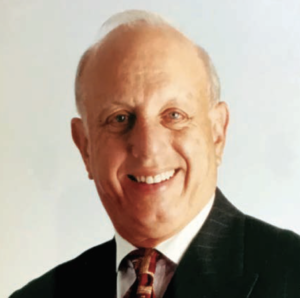
Julian Saul

Julian Saul had a great deal of success converting and growing Queen Carpet into a successful residential broadloom company from a scatter rug business started by Julian’s father, Harry Saul. In fact, Queen’s name came from chenille bathrobes (another product they manufactured) that were “fit for a queen.”
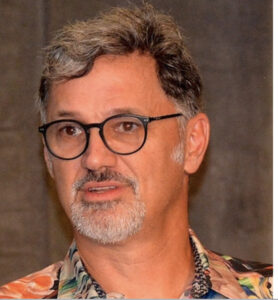
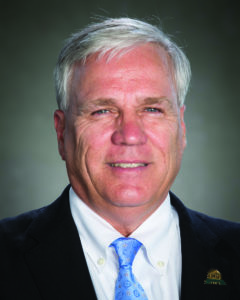
Julian once related that after graduating from Georgia Tech and going into the business he realized he was allergic to the sizing used in cotton bath rug production. “I had to convert the business to broadloom carpet or get out of it,” he recalled.

Julian had a passion for customers that he attributes to his father teaching him to never let the sun go down on an opportunity to serve a customer. Throughout his career Julian drove that passion for rapid responses to customer requests across the company.

—Sandy Mishkin, CCA Global Partners

Dave Gheesling

The industry lost a true visionary when Dave Gheesling passed away suddenly in November 2020, at the age of 53. His sharp mind, keen eye, passionate drive and kind spirit catapulted him to be an industry legend.

The founder of FEI Group, Gheesling touched the hearts of many and left a lasting impression on everyone he met.

Gheesling began his career selling industrial equipment before becoming involved in the flooring industry. He worked at both Mohawk Industries and Abbey Carpet and Floor before co-founding FloorExpo Inc., today known as FEI Group—the nation’s largest network of flooring contractors, cabinetry and countertop dealers, decorative hardware and plumbing showrooms, and roofing business owners. He remained president and CEO until his death.

A key component of FEI’s success is the group’s emphasis on culture, which was led by Gheesling. He was responsible for cultivating lasting relationships among contractors, builders and suppliers, and by nurturing and growing membership.

Don Finkell

When you think about the hardwood flooring industry, there are a few names that come to mind. One of those is Don Finkell.

After graduating from the University of Tennessee, he practiced architecture before being approached by his father-in-law, Bob Anderson, to join the family hardwood flooring business. He spent a couple of years working in every area of the company to learn the business.

He steered Anderson in the direction of being environmentally friendly. When a warranty card was returned, the company had two hardwood trees planted to make sure our hardwood resources were being replenished. He made sure the stains and adhesives being used were the most friendly to the environment. Don’s vision was for Anderson to be the style and innovation leader. In his travels he took pictures of things that caught his interest and turned these inspirations into works of art.

—Jeff Sills, retired executive

Alan Greenberg and Howard Brodsky

Howard Brodsky and Alan Greenberg shared a vision: to dominate the floor covering market by creating a unique business that would allow independent carpet retailers to operate profitably in an increasingly competitive marketplace.

That was 1984. Within a year, they achieved their goal—and made history—with the launch of Carpet Co-Op, with 13 initial members. It has since grown into a massive multi-industry cooperative (CCA Global Partners) that included diverse retail and service sectors, including lighting, mortgage, formalwear and cycling. Over time, CCA Global Partners scaled to thousands of locations producing billions of dollars in annual sales.

Greenberg, who had a lifetime of experience in the floor covering business—growing up in the family business—was known for his entrepreneurial spirit and vision that helped reshape the industry and elevate the professionalism of the floor covering retailer. As a former president of the Retail Floorcovering Institute (RFI), Greenberg was instrumental in launching the Executive Institute, which provided training for upper-level leaders. As president of RFI, he also testified in Washington, D.C., before the U.S. House of Representatives Ways and Means Subcommittee to clarify the tax status of independent contractors.

A pioneer of the cooperative business model, Brodsky dedicated his career to helping entrepreneurs build successful businesses by providing the scale, resources and innovation that they needed to compete in an evolving marketplace. Brodsky’s most significant accomplishment was his induction into the Cooperative Hall of Fame, established by the National Cooperative Business Association to recognize individuals and companies who make unparalleled contributions in advancement of the principles of cooperation in the United States. The first person to win that award was Benjamin Franklin; former vice president Hubert Humphrey also received that prestigious award.

Terry Wheat

As a young man in the late 1960s, Terry Wheat was introduced to the wonderful world of floor covering through a like-minded friend of the same faith—Shaheen Shaheen, founder of World Carpets.

He started off by merely carrying a few carpet samples in his car; next, he wrangled a line of credit from World Carpet and soon opened a store in Tuscaloosa, Ala. It would appear Terry had found his profession.

It became apparent Terry was a visionary, showing a knack for seeing what lies ahead and taking action. Early on, he saw how combining efforts with others helped everyone improve their business. As such, he was one of the earliest members of the CCA Co-op as a Carpet One Member.

Similarly, when computers became available to the masses in the early 1980s, Terry knew this was the future. He realized that in life, as well as in business, you need accurate information when making important decisions. He bought a computer and some floppy discs and started playing around with it. Now, decades later, RFMS is a renowned international floor covering software company.

Terry has accomplished what many of us find so difficult—balancing life, family, business, faith and success.

—Daniel Kennedy, Wholesale Floors, Inc.

Sonna CalandrinoSonna Calandrino

Sonna was truly an innovator and a lifelong learner. She attended the Fashion Institute of Technology in New York City, where she majored in textile design. It always bothered her that she never completed her degree, but it never stopped her from learning.

When we opened our first store, she spent hours with our CPA learning about business and profit and loss statements.

In the 2000s, she finally got to design and manufacture her own collection of rugs. She called me and excitedly told me to get ready to go on the road because we were going into the area rug business. Eventually, I set off with $20,000 worth of samples to sell our rugs.

She was most proud of her first textile rug design, which led to a collection of area rugs called American Home Design.

Sonna was a very private but generous person. Oftentimes, she contributed money anonymously.

Before Sonna died, she told me this wonderful story about a single mom she had helped over 20 years ago. The woman needed $2,000 to pay back charges on her mortgage; if she couldn’t, she was going to lose her house. Without saying another word, Sonna gave her the money. After that, Sonna said she never heard from the woman.

But three months before Sonna died, she received a check for $2,000 from the woman who borrowed the money. The letter that came with the check stated that the woman was dying, but she wanted to repay Sonna for the loan that saved her children—and her house.

—Lisbeth Calandrino

Michael Goldberg

Michael Goldberg, who passed away in December 2025, was a flooring industry retail icon who built RiteRug from a $20 million business to over $600 million.
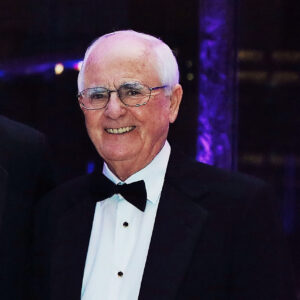
An Army veteran, Goldberg carried a profound sense of duty, integrity and commitment into every chapter of his life. With vision, determination and a passion for both people and innovation, he devoted much of his life to the company he loved.

Under his leadership, RiteRug grew from a respected local flooring business into a thriving, nationally recognized enterprise. His dedication to those who worked beside him, his drive to explore new opportunities and his unwavering commitment to excellence left a lasting impression on the company and on his many employees, customers and friends.

Over the years the business achieved unprecedented growth as it seamlessly navigated through the ebb and flow of economic cycles and recessionary pressure. In the mid-1990s, RiteRug grew to an impressive $40 million business operating almost exclusively in Ohio. Ten years later, it was a diversified $80 million business operating out of 11 states and 32 locations. During that time, it expanded from its retail roots into new construction, commercial, property management, floor care/maintenance, on-site hardwood staining and refinishing, window treatments and to-the-trade wholesale.

In 2018, Goldberg was honored with Floor Covering News’ seventh annual Al Wahnon Lifetime Achievement Award.

Tony Kelly

Tony Kelly, who served as president and CEO of Mannington from 1992 until his retirement in 2001, came to the Salem, N.J.-based company with a marketing background, and a PhD in marketing from Columbia University. Kelly was relentless in his belief and focus on the importance of product differentiation, simple and clear storytelling and attention to execution.

As Kelly demonstrated, he was also a man of great character and leadership, which was never more evident than during the Mannington Gold crisis that stemmed from a massive product failure. As former chairman Keith Campbell recalled, “Thank goodness for the leadership of Tony Kelly who did a marvelous job in guiding our way through [Mannington Gold]; we were able to traverse our way through it successfully. In looking back, Tony orchestrated something that could be written up in the Harvard Business Review; it was quite an accomplishment. It backed up who we were as a company.”

Ingvar Backhamre

When Ingvar Backhamre became CEO of North American operations for Tarkett in 1993, the company had just acquired the worldwide flooring business of GAF, which at the time was seen as a competitor to Armstrong even though it had no brand power.

“When I took over, I had to change everything,” Backhamre wrote in a column published by FCNews. “The first thing I did was analyze our competitors. At the time, Armstrong was by far the largest manufacturer of vinyl in North America—and the world—and we were the largest in Europe and second largest in the world. As such, we had no interest in positioning ourselves against Mannington or Congoleum. We wanted to position ourselves as the alternative to Armstrong, a very fine company that I have always respected.”

Backhamre gained notoriety for a series of ads, including one in which he dressed as a gun-slinging cowboy under the caption, “If Armstrong wants a modern shootout at O.K. Corral…make my day?”

Vance Bell

I’m honored to have been asked to share a few thoughts about Vance Bell—an exceptional leader and, more importantly, a dear friend. Ironically, it wasn’t until Vance became CEO that we were formally introduced at one of Shaw’s shows in Chicago. I knew of him, of course. He had worked his way through the ranks at Shaw Industries alongside Randy Merritt. Yet, despite the countless hours Bob Hill and I spent in Dalton, attending markets and working with industry leaders, our paths never crossed.

Ann McDermott, then vice president of national accounts, described Vance as even-tempered, calm and an exceptional listener. She couldn’t have been more accurate. While many CEOs are driven primarily by numbers, Vance has always been driven by people. Over the years, we shared many dinners with Vance, but one has always stayed with me.

It was October 2014, during Shaw’s Lifeguard Backing launch. We were all seated for dinner at the Dalton Country Club when Vance arrived a little late. For some reason, I found myself feeling a bit nervous. But within moments, it became clear why so many people respected his leadership. Instead of talking about himself, Vance immediately started asking questions: “How can we be better?” and “What can we do differently?”

He then turned to me and Liz Rivera, FCA Network’s soft surface buyer, and asked what we thought about Shaw’s new Lifeguard Backing products and merchandising. We loved the products, but we weren’t sold on the campaign tagline.

Vance smiled and asked, “What would you change?” Liz and I had already talked about it. Without hesitation we replied: “Life Happens on Shaw Floors … and it’s Awesome!”

Randy Merritt immediately picked up the phone and called someone in marketing. Our conversation that evening helped shape what would become Shaw’s memorable Life Happens campaign. In 2015, Shaw officially introduced the Life Happens collection featuring Lifeguard Backing, and it quickly became one of the company’s most successful product launches.

Vance is that rare leader who understands that the best path to the future isn’t one you walk alone.

—Olga Robertson, FCA Network

Roger MarcusRoger Marcus

A titan of the floor covering industry, Roger Marcus’ career spanned nearly 60 years, presiding over his family business, American Biltrite, for the past four decades.

The Marcus family story begins after World War II when his father, Robert, as president of American Tile Co., took the company that would later be known as Amtico from manufacturing rubber heels and soles to rubber flooring. The move came in the early 1950s when they started making thermoplastic vinyl floor tile. The company would be the first to chemically emboss, cut and register VCT tile, and would soon develop the first no-wax floor tiles in 1969.

All the while, Roger was rising through the ranks, beginning as a sales rep in 1967. He became CEO in 1983 and oversaw the merger of Congoleum in 1992. As CEO of Congoleum, he was involved in launching a litany of innovative products, including DuraStone, DuraCeramic, Ultima and ArmorGuard. At one time, the company was doing over $250 million.

Marcus had also donated his time and efforts to associations that forward the industry. He served multiple terms as president of the Resilient Floor Covering Institute, and was chairman of the Floor Covering Industry Foundation’s grant committee.

Al WahnonAl Wahnon

Al Wahnon was one of the best men I’ve ever known. In many ways, Al’s career and my own paralleled. We began working in the flooring industry virtually on the same day back in 1955—Al on the editorial staff of Floor Covering Weekly; I was a sales manager for the flooring distributor Stitt & Howell. The offices were on different floors of the Textile Building at 295 5th Ave.

Al’s boss, friend and mentor was the legendary Irv Genett, who was the founder and editor in chief of FCW. Al, who had returned from military service as an Army parachutist in World War II, was an idealist who could well have been a college professor had he not chosen journalism. He immersed himself in his job and, as one of the most naturally friendly people on earth, became a friend to many hundreds of the industry’s men and women, forming relationships that would serve him well.

Al’s passion was the flooring industry. He was equally interested in and respectful of sales reps, warehouse men and installers as he was CEOs and company officers. There was seldom a distributor golf outing, awards dinner or carpet club meeting at which he didn’t make a speech. He was always looking for a story—and an ad—to say nothing of some free shrimp at the buffet table. His dream to have his own newspaper came to fruition in 1986 when he and Mike Blick started Floor Covering News. They built a wonderful publication, of which Al was justifiably proud.

—The late Peter Spirer

David Kolb

After spending the first part of the 1980s modernizing and bringing Mohasco to profitability—including moving its headquarters from New York to Georgia—David Kolb led a leveraged buyout in 1988 and returned the company to its roots under the Mohawk brand.

He took the mill public in 1992 and became one of the most active participants in the industry’s consolidation. From 1992 to 1994, his purchases catapulted Mohawk from the 11th largest carpet mill to No. 2 and increased sales more than five-fold, from less than $300 million to $1.5 billion. Fortune magazine even ranked the company second among the fastest-growing companies.

Kolb recognized that Mohawk needed to diversify beyond broadloom if it ever wanted to be a global leader and helped drive that diversity as Mohawk’s chairman.

During Kolb’s nearly 25 years with Mohawk, the company grew from $200 million in revenue to the floor covering industry leader with annual sales in excess of $5 billion.

Lars von Kantzow

When great forces come together, powerful changes can occur. The “Pergo Phenomenon” in the early 1990s is an example of a new product, an industry in need, consumers wanting a change and, most importantly, a leader whose marketing wizardry changed an industry.

Lars von Kantzow was that unique individual. The Sweden-born president of Perstorp Flooring, von Kantzow brought Pergo to North America in 1992, introducing a new category of flooring. Through a multifaceted attack on the market, his strategy was to tackle every potential barrier to success before it challenged his plan. It was the successful implementation of that strategy that created category sales over $1 billion in 10 years representing 5% of all floor covering. Like Kleenex is to tissue, “Pergo” became synonymous with laminate flooring.

For consumers, searching for a product that would exceed expectations, a creative display with a high-heel shoe, a magic marker and a cigarette demonstrated Pergo was easy to maintain. Advertising dollars were wisely spent and multiplied by consumers’ word of mouth from satisfied customers talking about this incredible new product.

Peter SpirerPeter Spirer

I knew Peter Spirer for decades as a customer, employer and, most importantly, as a friend.

Peter [was among] the last of the group that grew the carpet business from the late ’50s on. Peter was always able to use his creative talents to develop new looks or concepts that in many cases were ahead of their time. But patience was not a virtue for him, so you had to move quickly to commercialize them and demonstrate sales, or he was on to the next invention. He had many notable products at Horizon. Peter also had an uncanny ability to identify marketing concepts that totally differentiated Horizon from the rest, launching programs in a first-class manner with a great deal of pizazz.

With his charm and articulate presentation, he was able to surround himself with outstanding talent and a large contingent of customers.

—Ralph Boe, former CEO of Beaulieu America

Ray Anderson

I worked with—and for—Ray Anderson for almost 20 years at Interface. He had a transformative impact on our industry, business in general and on my life and career. Three words come to mind when I think of Ray—entrepreneurship, vision and purpose.

Ray was the quintessential entrepreneur. In 1973, at age 40, he left a prominent job as head of R&D with a large textile company to follow a dream to bring carpet tile to the U.S. He borrowed money from friends and staked his future on a technology without securing the first customer. Struggling at first, his company (Interface) went on to become a billion-dollar leader.

It was in these early struggles that Ray learned about the importance of the customer. He would remind us of the early days when there were literally no orders on the books and how that clarified the deep importance of our customer, or as he would say—the “next heartbeat” of the company.

Ray also had amazing vision. His horizon was not the typical view of three to five years, but more on the order of 20-plus years. In the late ’60s, Ray saw the emerging workspace of the future that is still with us—open, flexible and ever-changing, an environment perfect for moveable, changeable modular carpet tile. In 1994 at age 60, Ray saw a different future for Interface. He wanted us to be the model for all; that by the year 2020 Interface would eliminate all negative impacts on the environment.

—John Wells, former president of Interface

Tom McAndrews

When it comes to industry products and marketing campaigns, Tom McAndrews has the distinction of being at the helm of its most successful one ever. In 1986, McAndrews was president of the DuPont Flooring Division, which was about to launch Stainmaster.

The previous fall, Chris Reilly, a strategic planner on McAndrews’ staff, brought researcher Armand Zanatto to the flooring division’s management to present his awareness of a stain-resistant discovery for carpets—a technology previously used by the apparel industry as a dye-resist agent.

The technology was married to the findings of a covert marketing group, which had been studying the various instruments and methods of consumer advertising that could stimulate demand for DuPont’s carpet products. By November 1985, McAndrews green-lighted his team to proceed quickly to commercialization, which included initiating exhaustive pre-market testing under the strictest secrecy covenants with four leading carpet mills.

The following year, the product rolled out and was backed by a massive advertising campaign the size and intensity of which had never been seen before or since in the flooring industry. Stainmaster took the world by storm—sales topped $1 billion in year one—and in 2000 its original TV commercial was voted one of the Top 10 of all time.

“Tom’s willingness to invest not only his money, but his time and talents as well has positively impacted many of our lives,” said Betty Tuppeny, then president of Domus Inc. “He so often comments that whatever successes he has had in his life were not solely of his own doing but were achieved as a member of a team.”

Norman Pomerleau

Norman Pomerleau has that innate ability to look at somebody or something and see the potential. In 2004, I was sitting across the table from Norman, who was presenting a carpet tile program from J&J Commercial that I thought could benefit me—and possibly him. We had just put together one of his first commercial carpet tile programs, which was a major coup for me, but what I didn’t realize was that it would be a transformative time in my life. Two months later, Norman turned the tables on me, and I began working for him. He would be my greatest mentor.

During meetings he’d ask a few questions and then cut to the chase of what was really important to building the strongest commercial program on the East Coast. He had a way of seeing things clearly in front of him, even six steps beyond. In the 1970s, he had the foresight to employ computer programmers to develop an inventory control system that was leaps and bounds ahead of the industry. Many large manufacturers toured NRF facilities to understand how NRF’s logistical system worked.

—Leah Ledoux, CONTRACT180/ARCH180, Inc.

Marvin Berlin

Marvin Berlin was a leader, mentor, teacher and, more than that, my good friend and confidant for many years. Even now, long after his passing, I often ask myself, “What would Marvin do?” if he were facing a difficult action or decision. Amazingly, somehow, the answers just seem to mysteriously appear crystal clear.

I believe Marvin’s truest gift to the flooring industry was thinking ahead on a global scale. He was a student of the industry, always asking questions, learning, teaching. One great example was New York Carpet World’s semi-annual product style-outs. It was educational for us, but it was eye-opening for the manufacturers.

Along with business partner, Irving Nusbaum, Marvin was determined to build the most successful independently owned and operated retail flooring business in the U.S. At one point NYCW expanded beyond Michigan to 200 locations in 17 states.

—Bart Levich, former executive at New York World Carpet

Phil Gutierrez

Phil Gutierrez, CEO, president and sole director and chairman of Abbey Carpet & Floor and Floors To Go, is a powerhouse. Described by those who know him well as the epitome of the “American Dream,” he is more than just the leader of the country’s first flooring buying group—he’s a difference maker.

Ask Abbey members why they have been successful and almost everyone will cite Gutierrez. In fact, they all have their stories about how Gutierrez has personally gone above and beyond for them.

“[Phil] was a mentor from the very beginning when we bought our store and when we started with Abbey, which was only a year after we purchased the store,” said Janice Clifton, owner of Abbey Carpets Unlimited in Napa, Calif. “He has paved some pathways that I don’t think anybody else would have paved.”

Paul Gearing, president of Gearing Floors to Go, Fort Myers, Fla., said Gutierrez was there for them in the beginning, making sure the showroom looked the best it could. “I was very happy to be a part of the family, and it was because of people like Phil.”

Ron Van Gelderen

Of all the flooring categories, perhaps none had to face the public scrutiny the way carpet did in the 1980s and 1990s. It reached a fever pitch in the early 1990s when it came under attack over indoor air quality and concerns about volatile organic compound emissions.

Fortunately, the industry had Ron Van Gelderen, who joined the Carpet & Rug Institute (CRI) in 1980 as president and COO and remained in that capacity through 2001 when he retired.

Van Gelderen not only defended the industry with science, but he was also the negotiator in the Carpet Policy Dialogue with the government and other organizations.

This ultimately led to CRI’s Green Label program in 1993. Since then, it was made even more stringent and renamed Green Label Plus, which has been accepted on a national level.

Van Gelderen’s legacy went beyond being the carpet industry’s front man in its greatest battle. He was a calming influence during the sector’s rapid consolidation and managed to keep mill executives both apprised and focused on the myriad issues that impacted the category.

Over the years, Van Gelderen dealt with issues ranging from shipping tariffs, flammability and toxicity standards; rug weights and measures, square foot pricing, installation guidelines and more. He also helped in getting the industry’s Flex credit card program started, was there when the Carpet Industry Issues Council formed and spearheaded the category’s “Carpet: It Just Feels Better” national campaign in the 1990s.

Chris DavisChris Davis

When I first met Chris Davis in 1994, I’d never met anyone who knew less about flooring, let alone the flooring industry. Less than 20 years later, he was in our industry’s Hall of Fame, a remarkable feat accomplished by only a select few others after a lifetime of experience.

Chris entered our industry because of his acumen in running conventions and trade shows. He was hired to oversee the merger of the Western Floor Covering Association and the American Floor Covering Association into the World Floor Covering Association (WFCA), as well as manage their ever-growing show—Surfaces. To say he was successful would be an understatement—growing Surfaces into the pre-eminent show in our industry.

We lost Chris far too early in 2012. I know he would be proud to see what today’s WFCA has become.

—Tom Jennings, WFCA retail expert/consultant

Pierre Thabet

In 1984, a fire completely destroyed the Boa-Franc facility in St. Georges, Quebec. But Pierre Thabet did not walk away. His post-traumatic shock lasted about two hours and then he made the decision to rebuild. He purchased a new building, brought in new equipment and had the plant operating after only three months.

What most people don’t know, however, is that after only four months in production, Pierre realized that all his “new” equipment was not new, wasn’t reliable and was, in fact, obsolete. Recognizing his mistake, he didn’t whine about it. With a strong sense of urgency, he immediately started shopping for better equipment and ended up replacing all the old machinery—for the second time.

This time he got it right, and his Mirage brand has been a shining example of excellence ever since.

—Louis Morin, former executive at Boa-Franc

Rose Blumkin

When she was 23, Rose Blumkin talked her way past a border guard to leave Russia for America. She had no formal education, not even at the grammar school level, and knew no English. After some years in this country, she learned the language when her older daughter taught her, every evening, the words she had learned in school during the day.

In 1937, after years of selling used clothing, Mrs. Blumkin had saved $500 with which to realize her dream of opening a furniture store. Upon seeing the American Furniture Mart in Chicago—then the center of the nation’s wholesale furniture activity—she decided to christen her dream: Nebraska Furniture Mart. She met every obstacle you would expect (and a few you wouldn’t) when a business endowed with only $500 and no location or product advantage goes up against rich, long-entrenched competition. At one early point, when her tiny resources ran out, “Mrs. B” coped in a way not taught at business schools: She simply sold the furniture and appliances from her house in order to pay the creditors.

Omaha retailers pressured furniture and carpet manufacturers not to sell to her. But by various strategies she obtained merchandise and cut prices sharply. Mrs. B was then hauled into court for violation of Fair Trade laws, a case she won. At the end of the case she even sold the judge $1,400 worth of carpet.

—Warren Buffett, chairman of Berkshire Hathaway

Raymond Mancini

When I think of Raymond, some of the attributes that first come to mind are fair-minded, laser-focused, passionate about his family business and customer-centric. As the CEO, these leadership traits all come into play at one time or another. He joined the Belknap White Group in 1996 in the sales department, assumed the role of president in 2002 and then CEO in 2018. Under his guidance, UCX (rebranded from the Belknap White Group) has grown into a top five flooring distributor.

As a leader, Raymond has high expectations for the team and for his customer base. He believes the UCX family will be the “go-to” distributor on the East Coast. Raymond is direct. He’s always listening to the potential alternatives, ultimately believing that success comes down to the high expectations of the team. Working together brings value to the flooring distribution business and makes it easier for our customers to do business with us. Teamwork makes the difference.

During the COVID-19 pandemic, Raymond raised the bar. These were very unusual times, filled with a great deal of uncertainty. Throughout all of this, he kept his leadership team laser-focused on everything that needed to be done by always keeping in mind the human aspect of this business and the well-being of his team. He has rallied the team to where we have accomplished so much in such a short time.

—Deborah Morrocco, UCX executive and Raymond’s sister

Darko Pervan

To a large extent, Darko Pervan and his Välinge Innovation Group personify mechanical locking systems. From the start in 1994 with laminate flooring, and more recently with the success of LVT and WPC, all hard surface categories have seen their installation procedures improved based on the patented locking systems he developed and marketed.

From humble beginnings, Darko built a formidable team of executives to accommodate the needs of the flooring industry, doing so with robust solutions, technical service and innovation. The 170,000-square-foot R&D facility in Viken, Sweden, for example, has been visited by scores of North American hard surface flooring companies.

When I think of Darko, I think of a problem solver with an entrepreneurial spirit who never gives up.

—Claes Wennerth, former president of Alloc and long-time industry executive

David Meberg

When I think of Dave Meberg, whom I have known as a friend for more than 25 years, I think of a guy who is intelligent, has a big presence—both physically as well as the way in which he conducts himself. One of the cool things about him is he understands the job from the ground up. He’s not one of these guys who hung around the country clubs growing up and just happened to take over his dad’s company.

Dave came from a family of old-school Norwegian guys. He learned to work the trucks; he worked the warehouse where his family made him sweep the floors.

To this day, I am amazed at how involved he is. Dave has his own business (he is principal, president and CEO of New York-based Consolidated Flooring), but he’s also actively in so many industry endeavors.

—Brett Morrow, chief executive officer of Soundtone Floors, Long Island City, N.Y.

Randy MerrittRandy Merritt

Randy and I have been friends for many years, and our friendship dates back to our first days at Shaw. From the beginning, Randy was always a team player as well as a highly effective team leader. He thrives on competition and has an amazing ability to understand complex problems or situations and then provide effective direction and wise counsel. He’s also a very compassionate person who has been involved in the Dalton community, his church and organizations like the United Way and St. Jude Children’s Research Hospital.

In business, Randy epitomized the Shaw core values of honesty, integrity and passion while earning the respect of his fellow associates. He also developed strong bonds with an extraordinary number of Shaw customers that served the company well as we continued our important mission of being their flooring supplier of choice. In his personal life, Randy is extremely family oriented.

Randy’s contributions to Shaw over the years are too numerous to list. However, I would stress that Randy, Vance (Bell), Ken (Jackson) and Hal (Long), the senior management team, provided outstanding leadership and guidance through the depths of the Great Recession and into today’s business climate.

I feel blessed to have had such a long-term friendship with Randy and believe the company was very fortunate to have had him as president.

—David Wilkerson, retired corporate director, sustainability and product stewardship, Shaw Industries

Piet Dossche

Originally from Belgium, Piet Dossche came to this country to join Beaulieu of America in 1989, and he started USFloors in 2001. When I joined the company at the end of 2004, Piet shared his vision of building an organization that could rival the dominant players in the industry.

I thought this sounded quite aggressive. Fast-forward to 2016; through Piet’s leadership, USFloors is positioned to compete with the best. Not even a near cataclysmic downturn in the economy could derail USFloors. In fact, the company managed to grow during the downturn.

Some people may not know that the US in USFloors stands for “unique” and “sustainable.” When he started the company, Piet knew that not only would he have to have a different approach in order to succeed, but his ultimate goal was to find a way to disrupt the market instead.

With cork and bamboo, he became the market leader; with COREtec, he is revolutionizing the LVT/WPC category.

Piet is an overachiever and charismatic leader who drives people hard and challenges them daily to become their best. Innovation, speed to market and excellence in service is the credo he preaches daily, and he will not compromise. Piet is always thinking ahead about the needs of the organization; when he shares his vision and goals for the future, I scratch my head. But as the years go by, he never stops surprising me.

—Philippe Erramuzpe, former COO of USFloors

Jeff Lorberbaum

In February 1994, Mohawk Industries completed its largest and most important merger with Aladdin Mills. The Aladdin merger brought with it a company averaging double-digit growth for many years.

The merger with Aladdin had an additional benefit that came as a surprise—Jeff Lorberbaum. We did not realize how great a leader Jeff would be, but from his very first day he was on top of everything; he knew it already. As a result of his family’s involvement in the carpet business for most of his life, Jeff possessed a complete and extensive knowledge of the flooring business. He took with him the best parts of his mom and dad, both of whom I knew and liked very much.

Jeff and I worked together until I retired as CEO and later as chairman. Jeff succeeded me in both positions. In the time we worked together, we never argued. I was very lucky to have worked with him.

Over the past two decades, Mohawk has grown exponentially through acquisitions and continuous reinvestment in the business. Today, Mohawk is the largest flooring company, operating manufacturing facilities in 19 nations with sales in approximately 180 countries and an enterprise workforce of roughly 43,000 employees.

The success of Mohawk is the direct result of the powerful leadership provided by Jeff. His knowledge, strong work ethic and unparalleled drive and vision contributed to Mohawk’s unprecedented position in the industry.

—The late David Kolb, former CEO and chairman of the board of Mohawk

Dean McKinney

Dean McKinney was known as a consummate professional—friendly, honest, meticulous and a mentor. It was those qualities that made him one of the most respected leaders in the flooring industry during his 38-year career that began in 1954 when he was a marketing rep for Armstrong World Industries. Two years later, he left Armstrong and headed to Chicago to work for Carson Pirie Scott as a residential sales rep. McKinney rose through the ranks, becoming chairman of the $175 million retailer in 1986.

At a time when the flooring covering industry was putting together the concept for a private-label credit card, it needed someone who was trustworthy and able to work with all segments of the selling chain—from mill to retailer.

McKinney, who had retired in 1986 following a nearly four-decade career, was the person called upon. Considered one of the industry’s most respected leaders, he raised $842,000 to get the fledgling Floor Covering Consumer Credit Association (FC*CCA), better known as the Flex credit card, off the ground.

Jim Walker

Jim is one of the most interesting individuals I have ever met. He could walk into any room and display such a passion for the industry that every individual in the room would be moved. And believe me, you never had to worry about what Jim was thinking; he had the uncanny ability to tell you something you hated to hear. Yet, at the end, you thanked him for it.

Jim’s knowledge of the industry and his vision for the future always fascinated me. In the past, Jim and a handful of individuals took a chance on training and developing a group of individuals into “certified flooring installers.” Jim and his CFI compatriots knew that something had to change in this industry, that installers had to be trained and recognized for the pivotal role they play.

Because of Jim Walker’s sacrifice and dedication to this industry CFI has changed the lives of hundreds, possibly thousands, of individual installers and retailers throughout the world. Thanks to the work that Jim Walker and CFI have done, countless claims have been redirected or prevented outright.

—Robert Varden, former vice president of Certified Floorcovering Installers (CFI)

Dick McAdams

Dick McAdams was 23 when he founded his first company, McAdams Carpets in Montgomery, Ala. And thus, a legend was born.

At one time, McAdams was listed in the book of world records for owning a retail store that did the most business per square foot in the world.

By 1975, McAdams Carpets had become the largest flooring dealer in Alabama, a distinction his store would have for 20 years when it discontinued residential sales. In 1988, McAdams founded Georgia Carpet Outlets (GCO), a niche concept that was new to the industry: a cash-and-carry concept that made McAdams an industry icon.

GCO was met with such great success, McAdams began franchising the idea. Within six years, GCO had grown to 64 company-owned and franchised stores. By the time McAdams sold GCO to The Maxim Group, the chain had more than 100 stores, including 54 franchises in 22 states.

McAdams was inducted into the World Floor Covering Association Hall of Fame in 1998.

Must Read

MSI expands Q Bocage collection with new colors

Orange, Calif.— MSI has expanded its Q Bocage collection with three new colors inspired by natural stone. The additions feature distinctive veining and organic visuals...

Voting open for 2026 FCNews Style & Design Awards

Huntington, N.Y.—Floor Covering News is seeking nominations for its annual FCNewStyle & Design Awards, a program that recognizes outstanding achievement in product visuals across today’s most...

AHF Products: Icons that stand the test of time

When the first issue of Floor Covering News arrived in 1986, Ronald Reagan was president, “Top Gun” was dominating movie screens, the average new...

Stanton: All about design, innovation, partnership

Every great company begins with an idea. For Stanton, that idea was simple, yet ambitious: create flooring that people didn’t simply walk on, they...

INSTALL expands apprenticeship recognition program

Washington, D.C. —INSTALL has expanded recognition of its apprenticeship and workforce training programs across the western U.S. as contractors seek more skilled flooring installers. Recent...

Execs look back over vinyl’s rapid rise

PIET DOSSCHE founder and former CEO, USFloors Without any doubt, the introduction of COREtec in 2013 by USFloors has been the biggest event that...

As seen in

August 10, 2026

DOWNLOAD
Some text some message..
X