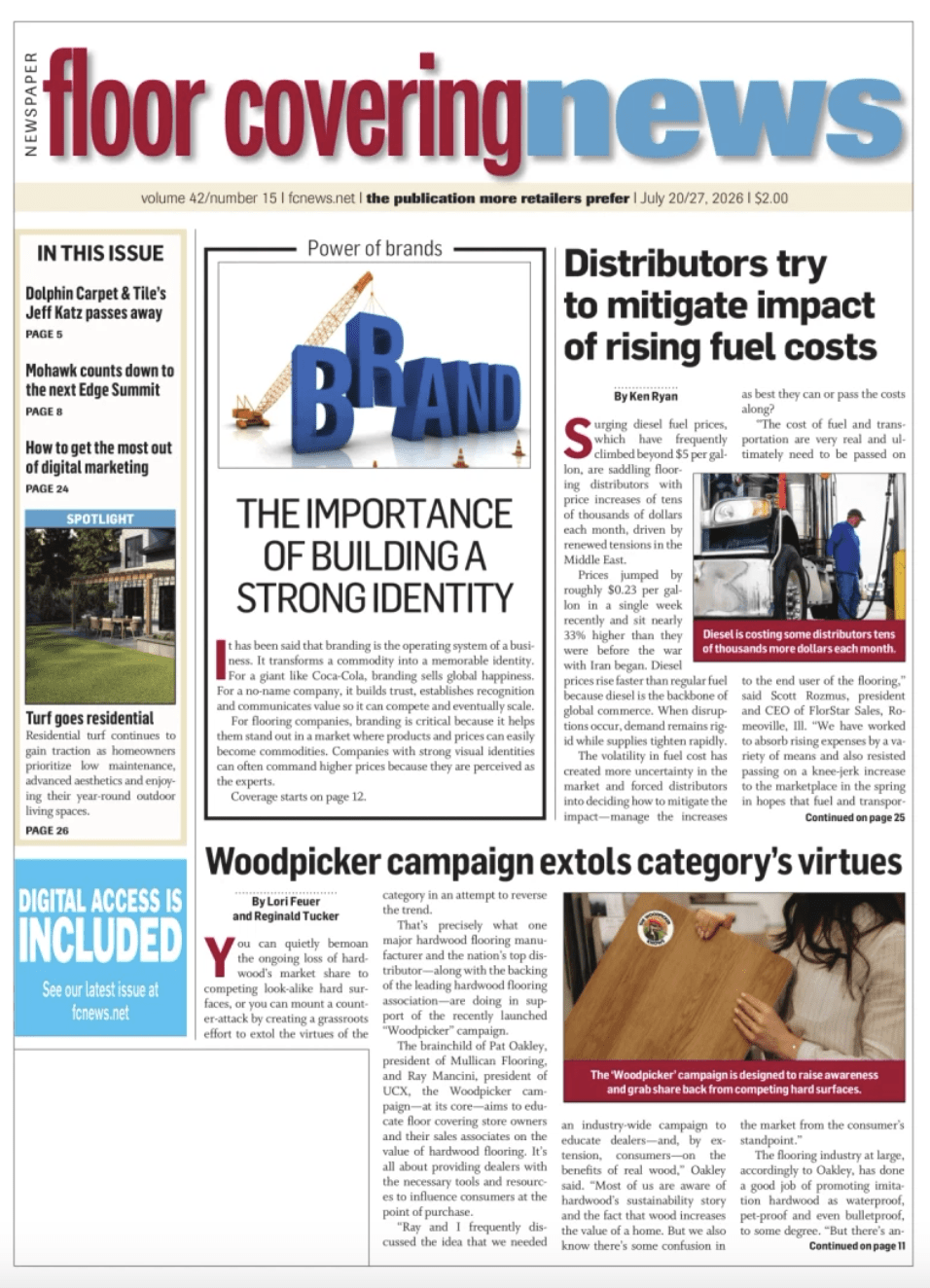
Consumers in the market for flooring today have more choices than ever before. The red-hot resilient flooring segment (particularly WPC, SPC and LVT) continues to seize market share. Meanwhile, laminate visuals have never looked better. And yet, despite intense competition from alternative hard-surface categories, genuine hardwood flooring remains the product against which every other flooring material is measured.
For flooring retailers, hardwood also represents one of the strongest opportunities to improve margins, increase average transaction values and build long-term customer satisfaction, purists note. The challenge isn’t convincing every shopper to buy hardwood—it’s helping qualified customers understand why the investment often delivers greater value over the life of their home. Successful salespeople don’t “upsell,” per se. Instead, they educate customers by focusing on lifestyle, long-term ownership costs and emotional appeal.
Following are five proven strategies that consistently help retailers trade buyers up from look-alike products and into real hardwood.
1. Demonstrate hardwood’s inherent value
Sticker price tells only part of the story. Hardwood look-alikes may cost less initially, but hardwood often delivers substantially greater value over its service life. Salespeople should explain that quality solid or engineered hardwood can remain in a home for generations. And depending on the product, many hardwood floors can be sanded and refinished multiple times, allowing homeowners to restore the original appearance rather than replacing the floor entirely.
Compare that with products that generally require complete replacement once they experience excessive wear, moisture damage or changing style preferences. When homeowners evaluate flooring over a 30- to 50-year period instead of a five- to 10-year horizon, hardwood frequently becomes the better financial decision. Note: RSAs should avoid trashing competing categories. Instead, position each flooring type appropriately while explaining where hardwood excels.
“From the retail sales associates to the store owner, hardwood provides the highest margin opportunities for dollar per square foot,” said Chris King, vice president, residential sales, AHF Products. “By defaulting to other products, the RSA is leaving dollars on the table.”
2. Emphasize longevity vs. fleeting style, design trends
Flooring trends change constantly, but classic visuals never go out of style. That can be said when convincing consumers to pay more for the timeless visuals hardwood flooring offers.
For example, Gray finishes once dominated display racks, only to give way to warmer browns. Matte finishes continue gaining popularity, while wider planks remain in demand. At the end of the day, genuine hardwood has successfully adapted through every design cycle because the material itself is enduring.
RSAs should emphasize that hardwood offers remarkable flexibility as decorating tastes evolve. Cabinet colors can change. Wall paint can change. Furniture can change. But a quality hardwood floor often complements multiple design styles over several decades. Consumers planning to remain in their homes for many years should recognize that replacing flooring simply because trends have shifted represents a significant future expense. Hardwood’s enduring appeal allows homeowners to update surrounding décor while maintaining the same flooring foundation.
“Hardwood is widely recognized for increasing a home’s resale value and remains a sought-after feature among buyers,” said Jerome Goulet, VP of marketing, Mirage. “While many plastic products need to be replaced after 10 to 20 years, quality hardwood flooring can last for decades (100 years). It can also be sanded and refinished multiple times, extending its lifespan and reducing long-term replacement costs.”
3. Use authenticity as a differentiator
With the advent of digital printing as well as advancements in embossed in registration (EIR), resilient and laminate flooring suppliers alike have become much more adept at replicating real hardwood visuals. In fact, many consumers may initially struggle to distinguish premium laminate or upper-end LVT from real wood in a showroom display.
As good as these products are at mimicking genuine wood, though, they have their limitations—a big one being the limited amount of variation when installed in a large area. The discerning eye will be able to spot pattern repetition very quickly.
That’s where real hardwood has the advantage. Given the fact that it’s a natural product, every hardwood plank possesses unique grain characteristics, mineral streaks, color variation and natural texture that cannot be perfectly duplicated. It would serve RSAs well to explain that no two hardwood floors are exactly alike. Those differences create character and individuality that manufactured products intentionally attempt to imitate. Sales associates can reinforce this message by allowing customers to handle large samples, compare multiple boards and view installed displays under natural lighting.
Again, the objective isn’t to diminish alternative flooring categories. It’s to remind shoppers that virtually all the aesthetic characteristics of modern laminate and LVT—embossed texture, digitally printed knots and beveled edges, for example—are traits originally inspired by real wood.
4. Strike an emotional chord
Consumers generally shop for flooring because they’re excited about replacing outdated, worn materials. They’re remodeling a dream kitchen, purchasing a forever home, preparing for retirement or creating a better living space for their family, etc. Hardwood aligns naturally with those aspirations.
Research consistently shows that hardwood remains among the most desired flooring surfaces in residential real estate. Homebuyers often associate genuine wood floors with quality construction, timeless design and higher home value. That emotional connection can outweigh modest differences in initial purchase price.
So instead of opening with cost comparisons, ask questions such as: “How long do you expect to stay in the home?” or “What style are you trying to create?” Questions like these allow the salesperson to position hardwood as an investment rather than simply another flooring option. The conversation should shift from “What does hardwood cost?” to “What does owning hardwood mean?”
5. Show and tell the story
Today’s consumers increasingly want to know where products come from. For example, domestic species such as white oak, red oak, maple and hickory originate from responsibly managed North American forests, where sustainable forestry practices have allowed hardwood inventories to expand over many decades.
Customers also appreciate understanding the craftsmanship involved in manufacturing hardwood flooring—from careful lumber selection and kiln drying to precision milling, finishing and quality control. Many hardwood manufacturers continue producing flooring in the United States, supporting domestic jobs while maintaining rigorous quality standards.
Sharing this story with shoppers not only provides a compelling case for hardwood, but it also creates confidence. Rather than presenting hardwood as another SKU on the showroom floor, retailers can position it as a premium building material with a rich history, natural beauty and lasting environmental value.
At the end of the day, trading customers up to hardwood isn’t about convincing every shopper to spend more money. It’s about identifying homeowners whose lifestyles, design goals and long-term plans align with the unique advantages of genuine wood flooring.
When salespeople focus on authenticity, durability, lifetime value, timeless design and compelling product stories, price becomes only one part of the purchasing decision.