Laminate flooring suppliers are not sitting idly by while the red-hot resilient flooring segment continues to gobble more market share—quite the contrary. While WPC/ SPC/LVT products may hold the upper hand in the waterproof department, laminate suppliers are seeking to gain a competitive advantage by focusing on the aesthetic attributes the category has to offer, as laminate designs strive to more closely match real wood, ceramic or other natural materials. (This on top of its well-earned reputation for durability, scratch resistance and performance.)
At the core of these efforts are advancements in digital imaging/ scanning technologies. These innovations, which also include embossing, surface finishing and proprietary manufacturing techniques, have enabled laminate producers to narrow the visual and performance gap between laminate and the natural materials the category seeks to emulate.
One of the most noteworthy developments has been the evolution of high-resolution digital imaging and printing technology. Earlier generations of laminate flooring often relied on relatively repetitive photographic patterns. Today’s manufacturing technology allows producers to create much more sophisticated decorative layers. High-resolution digital photography and improved printing systems capture extremely detailed characteristics of natural wood, including knots, mineral streaks, grain variations, color shifts and subtle imperfections. Manufacturers can then reproduce those characteristics across multiple designs and plank sequences.
This has helped laminate move beyond simply imitating generic oak or maple. Modern products can reproduce the visual characteristics of specific wood species and styles, ranging from white oak and European oak to walnut, hickory, ash and other popular hardwoods, even reclaimed lumber. Wider/longer plank formats further reinforce the appearance of a genuine hardwood installation. The same applies to ceramic tile, stone, slate, marble and travertine looks. Not only have laminate manufacturers achieved tremendous strides in mimicking these tile and stone visuals, but they have been able to achieve these popular looks via traditional plank formats—which is no easy feat. Suppliers have also been able to enhance visual realism by creating designs that reflect fewer pattern repeats. Rather than simply repeating a small number of photographic images, manufacturers can produce larger pattern libraries and more varied plank visuals.
For retailers, this is an important selling point because consumers often judge realism by looking at an installation as a whole rather than examining a single plank. Greater visual variation makes it more difficult to identify repeating patterns and gives the finished floor a more authentic appearance.
Capturing the look and feel
The latest innovations don’t stop at visual characteristics. Thanks to ongoing advancements in surface texturing, i.e., EIR, traditional laminate can more accurately reproduce the heft and feel of real wood planks. Manufacturers can now create textures that correspond closely with the printed design beneath them. This allows the physical texture of the surface to align with the visual grain pattern. A consumer may see a knot or prominent grain feature and actually feel a corresponding indentation or raised area.
Manufacturers are also getting much better at replicating other aspects of the genuine article—namely bevels in hardwood flooring planks. Four-sided bevels, for example, can emphasize the individual-plank appearance associated with hardwood. More sophisticated edge treatments can make laminate installations resemble premium wood products rather than a continuous printed surface.
Of course, none of this matters if the product doesn’t have the right gloss level. Innovations in surface technology enable manufacturers to manipulate sheen and/or finish to reproduce more naturally looking flooring products. For example, a matte or low-sheen surface can help replicate the appearance of an unfinished or naturally aged hardwood floor, while deeper texturing conveys a more aggressive wire-brushed or hand-scraped wood. Other finishes can reproduce the worn characteristics associated with reclaimed or distressed flooring.
Following is a sampling of some of the latest laminate flooring lines that leverage the aforementioned advancements and technological innovations to render more realistic visuals.
 BHW: Waterfront
BHW Floors’ Waterfront laminate collection was crafted to be the centerpiece of a beautiful home with its eye-catching planks that span 87 inches in length by a broad 9 inches in width. Planks are accented by their four-sided, painted bevel edges.
 Classen: PURA
Classen, one of Europe’s largest laminate flooring producers, demonstrates its expertise in the category with PURA, a high-end look without the high price tag. The product’s extra-long planks and highly refined synchronized surface structures are almost indistinguishable from real wood.
 Engineered Floors: Empower
Engineered Floors extends its PureGrain brand to the Renew laminate collection. Currently available across two platforms— Empower and Restore—these core trade-up products feature the latest design trends with stylish wood visuals that are popular with today’s consumers.
 Hallmark: Crescendo
Hallmark Home’s Crescendo collection features TrueTouch Texture and 3D graining, delivering realistic oak visuals. The fade-free finish and waterproof locking system combine to reduce callbacks while its pet-friendly, scratch- and stain-resistant surface broadens appeal.
 Inhaus: Landmark
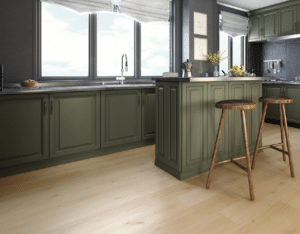
Inhaus’ signature Landmark laminate collection offers trade-up opportunities for retailers. The product, which comes in planks measuring 50 inches long x nearly 8 inches wide, makes a bold statement in any setting. Popular styles include Norfolk, Scarborough, Snowdrop, Springfield and Ellesmere (pictured).
 Johnson Hardwood: Bella Vista
Bella Vista is a high-performance laminate flooring that offers realistic EIR wood textures with AC5 commercial-grade durability. Designed for high-traffic spaces, it combines scratch resistance, easy maintenance and Välinge 5G Dry locking technology.

Mohawk: Sonora Rise
Sonora Rise, Mohawk’s latest addition to its popular RevWood Plus line, is designed to serve as a conversation piece in the home. Measuring 9 7/16 inches wide x 80.5 inches long, the new plank format is the widest RevWood board to date. The line reflects the aesthetic shift toward cleaner visuals and features the company’s signature GenuEdge pressed bevel technology for added realism.
 Shaw Floors: Komondor
Komondor, a Pet Perfect laminate from Shaw Floors, features the timeless beauty of white oak, offering ultra-realistic wood textures in eight colors. Every knot and grain isn’t just seen—it’s felt, thanks to its embossed-in register (EIR) texture. Komondor brings elevated style and lasting pet performance to any space.
 Provenza: Modessa
Provenza’s Modessa Laminate floors, modeled after some of its top-selling hardwood lines, features high-definition, 10-pattern design format for fewer plank repeats. Its EIR texture and an enhanced four-sided pressed bevel edge deliver the ultra-realistic luxury hardwood visual that today’s consumers demand.
 Stanton: Nuvo Grand
Following the successful launch of its Nuvo Lux and Nuvo Max lines, Stanton Design ups the ante in realism with its new Nuvo Grand collection. The product is a hefty 14mm thick, including an integrated 2mm IXPE pad, and comes in two plank sizes: 5 x 48 and 8 x 60. For the finishing touch, Nuvo Grand sports a micro-painted bevel and EIR for added depth and realism.
 Titan Surfaces: Legacy Grove
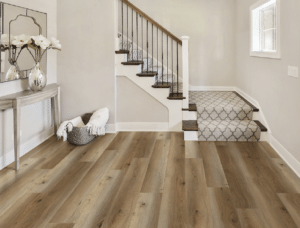
Primarily known for its expertise in rigid core flooring—namely WPC and SPC—Titan Surfaces also offers an impressive array of laminate flooring products. Chief among them is Legacy Grove, a 12mm-thick laminate, which provides the heft and feel of a real hardwood floor but with the high-performance attributes of a laminate.