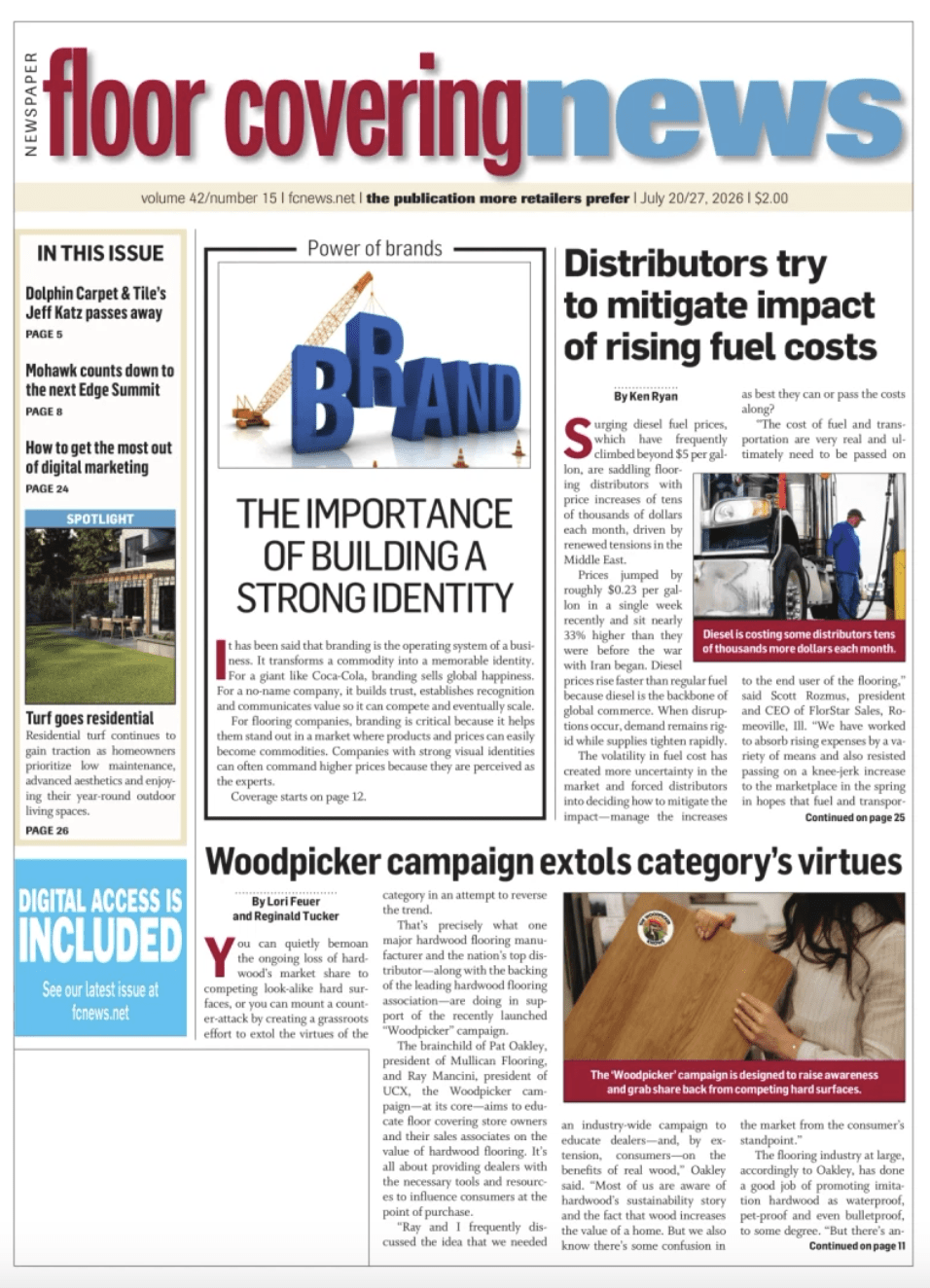
Artificial turf is no longer reserved for putting greens and athletic fields. What was once considered a niche product has become an increasingly viable landscape solution, driven by changing consumer lifestyles, water conservation efforts and advances in turf technology that have dramatically improved its appearance and performance.
“The category has evolved from a niche application, primarily associated with sports and specialty uses, into a mainstream residential solution,” said Josh Martenn, vice president of commercial sales at Ecore. “Turf has demonstrated strong staying power and is no longer viewed as a short-term trend.”
Expanding into residential
Over the last several years, turf has steadily made its way into residential applications as homeowners rethink what they want from their outdoor spaces. Today, homeowners are viewing turf as another outdoor surface option—one that eliminates much of the maintenance associated with a traditional lawn.
“Residential turf has experienced remarkable growth across the U.S. as homeowners increasingly seek beautiful, low-maintenance outdoor spaces that conserve water and remain attractive year-round,” said Neeraj Shah, vice president – product national, MSI. “Factors such as drought concerns, water restrictions, rising maintenance costs and a greater emphasis on outdoor living have all contributed to this trend.”
Suppliers agree the product’s low maintenance is helping fuel its popularity. “It’s consistent in any kind of climate, any kind of weather, any kind of shade conditions,” David Gross, executive director, INSTALL, told FCNews. “When you’re talking about residential areas, you have very sunny parts of the yard, very shady parts of the yard, and it’s pretty tricky to get consistent grass across that. Synthetic turf doesn’t have that problem. You can cut down on the maintenance demand by having synthetic turf. There are a lot of angles that are contributing to why synthetic turf is growing.”
Product design, too, continues to advance and influence homeowner decisions. “Over the last few years, turf has improved in terms of color, texture and overall realism, which has helped change perceptions and driven interest in turf,” said Travis Cramer, vice president and general manager, Tarkett Home. “For families who love to spend time outdoors, pets that love to run around and anyone who wants a beautiful lawn without the upkeep, turf is a great option. We see homeowners looking for outdoor solutions that are easy to maintain, attractive and practical. Turf checks all of these boxes.”
New markets
Drought-prone states remain among the category’s strongest markets, but suppliers agree residential turf is no longer confined to one region of the country.
“Residential turf continues to have appeal in the West and Southwest, where drought and heat are major considerations, but we are starting to see adoption across the United States,” Cramer explained.
MSI’s Shah noted that demand is expanding throughout the Sun Belt, Florida and rapidly growing suburban communities nationwide, where homeowners value low-maintenance landscapes that remain beautiful throughout the year.
Ecore’s Martenn added that demand is increasingly driven by lifestyle factors—busy households, pet owners and second-home owners—rather than geography alone.
The future of turf
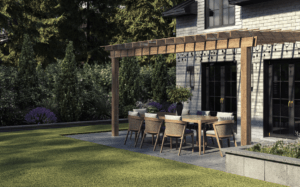
Manufacturers say they expect residential turf to continue evolving as both product innovation and consumer expectations advance.
For MSI, that evolution is closely tied to the continued growth of outdoor living and sustainable landscape design. According to Shah, homeowners and designers are increasingly looking for complete outdoor solutions that combine attractive, low-maintenance materials with lasting performance. “Turf will continue to play an important role alongside products such as porcelain pavers, natural stone and outdoor wall systems to create multifunctional spaces that are beautiful, durable and easy to maintain,” he said. “Continued innovation will also drive improvements in realism, comfort, drainage and overall performance.”
As homeowners continue to view their outdoor spaces as extensions of the home, manufacturers expect demand to follow suit. “Homeowners now think of their yard as an extension of their home, and are using the space to relax, play and entertain,” Tarkett Home’s Cramer said. “Turf makes it easier to create an outdoor space that is always ready to enjoy without having to spend the time on lawn maintenance.”
Alongside evolving lifestyles, sustainability is expected to play an even larger role in the category’s future. “The next phase of the category will be shaped by continued advancements in sustainability and performance,” Martenn said. “There is increasing focus on infill materials, PFAS-free systems, recyclability and improved drainage. Manufacturers that address these priorities will differentiate themselves in the market.”
Finally, to reap the benefits of increasing demand across markets, experts agree it’s also important to focus on supporting the labor market. “There is a bonafide shortage of skilled tradespeople and that includes landscapers,” Gross explained.
Chuck McClurg, president of Shaw Turf, said that capturing that growth will require a model designed around how the landscape professional operates and what they need to succeed.
“Landscape professionals continue to drive the landscape market, influencing the bulk of product decisions. As a result, the brand is focusing on what installers and contractors need most: speed, simplicity, local availability, residential delivery and consistent support.”